JOINT REPLACEMENT
Home
Our Expertise
What Is Joint Replacement?
Joint Replacement is an advanced orthopedic procedure typically recommended for patients suffering from severe arthritis and significant joint damage. The surgery aims to reduce pain, restore movement, and improve overall quality of life.
Who May Need Joint Replacement Surgery?
Patients are usually considered for Total Joint Replacement when arthritis and joint degeneration become severe enough to interfere with everyday life and non-surgical treatments are no longer effective.
Daily Activities Become Difficult
Arthritis affects not only work and recreation but also routine day-to-day activities such as walking, climbing stairs, and mobility.
Persistent Joint Pain
Pain continues despite medications, physiotherapy, arthroscopy, walking aids, or lifestyle modifications.
Significant Joint Stiffness
Stiffness limits movement and makes everyday activities increasingly difficult and uncomfortable.
Advanced Arthritis on X-Rays
Diagnostic imaging reveals severe cartilage damage, joint deterioration, or other significant abnormalities.
When Should You Consider Joint Replacement?
If arthritis pain is affecting your independence, limiting your mobility, and preventing you from enjoying normal daily activities, joint replacement surgery may be the most effective long-term solution.
Modern joint replacement procedures can provide significant pain relief, improved function, better mobility, and an enhanced quality of life for patients with advanced joint disease.
What Is Joint Replacement Surgery?
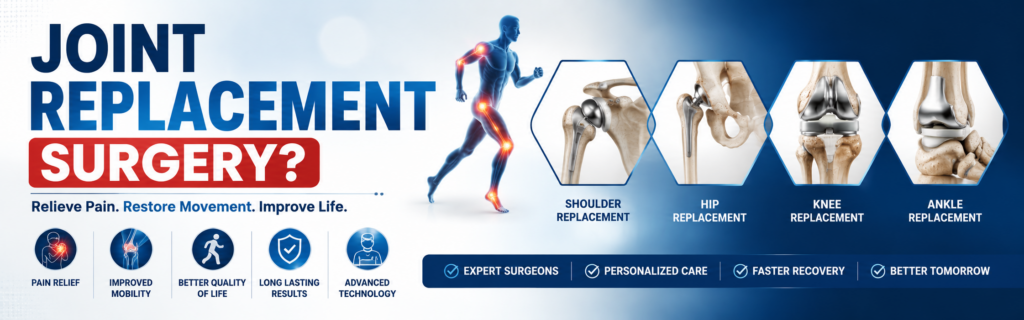
Joint replacement surgery is a procedure in which a damaged or worn-out joint is removed and replaced with an artificial joint (prosthesis). A joint is the point where two or more bones meet, such as the knee, hip, shoulder, elbow, ankle, and finger joints.
The procedure is performed by an experienced orthopaedic surgeon to relieve pain, restore mobility, and improve the overall quality of life. In some cases, the surgeon may replace only the damaged portion of the joint instead of the entire joint.
Benefits of Joint Replacement Surgery
Relieves chronic joint pain and discomfort.
Improves mobility and flexibility.
Enhances quality of life and independence.
Helps patients return to daily activities.
Reduces stiffness and improves joint function.
Provides long-term relief from severe arthritis.
Commonly Replaced Joints
Knee Replacement Surgery
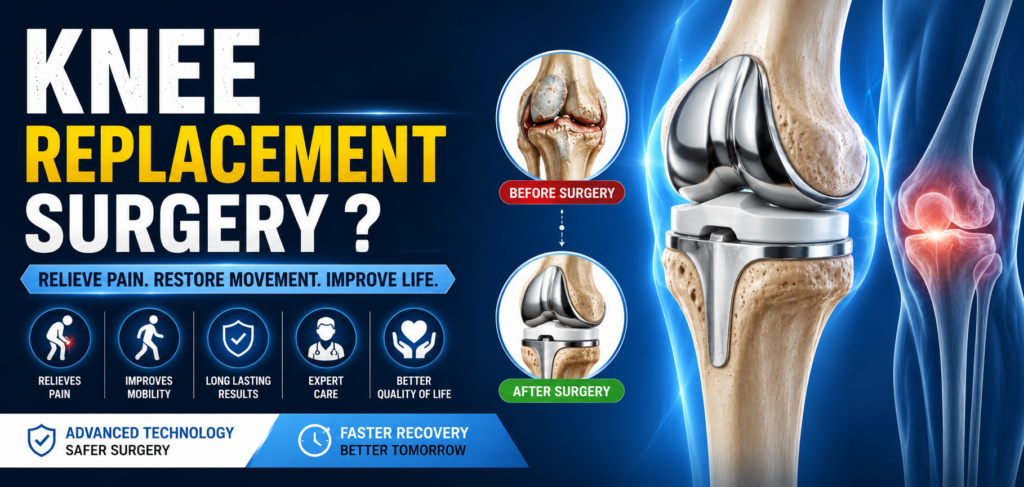
Total Knee Replacement (TKR) is an advanced surgical procedure in which worn, damaged, or diseased surfaces of the knee joint are removed and replaced with artificial components. The goal of knee replacement surgery is to relieve pain, restore mobility, and improve the patient's overall quality of life.
Understanding Your Knee Joint
The healthy knee is one of the most important and complex joints in the body. It is formed by the lower end of the femur (thigh bone), the upper end of the tibia (shin bone), and the patella (knee cap).
A healthy knee contains a layer of cartilage between the bones, acting as a natural cushion that enables smooth and pain-free movement. The joint is also surrounded by a capsule containing the synovial membrane, which produces lubricating fluid to reduce friction and support effortless movement.
Cartilage Cushioning
Protects bones from friction and absorbs shock during movement.
Smooth Joint Motion
Allows comfortable walking, bending, sitting, and daily activities.
Synovial Fluid Lubrication
Reduces wear and tear by keeping the joint properly lubricated.
Joint Stability
Supports body weight and enables long-term mobility.
How Arthritis Affects the Knee
The human knee is designed to withstand years of physical activity. However, conditions such as osteoarthritis, rheumatoid arthritis, and other degenerative diseases can gradually damage the cartilage and joint surfaces.
As the protective cushioning wears away, bones begin rubbing against each other, leading to chronic pain, stiffness, swelling, reduced mobility, and difficulty performing everyday activities. In severe cases, total knee replacement surgery may become the most effective treatment option.
All You Need to Know About Knee Replacement Surgery
Total Knee Replacement (TKR) is one of the most successful orthopedic procedures, helping patients regain mobility, reduce pain, and improve their quality of life.
Common Causes
Osteoarthritis caused by wear and tear is the most common reason for knee replacement surgery. Rheumatoid arthritis, injuries, and infections may also damage the knee joint.
When Is Surgery Needed?
Surgery is recommended when knee pain and stiffness significantly affect daily activities, mobility, and overall quality of life.
Benefits of TKR
Total knee replacement is designed to provide painless standing, sitting, walking, and improved participation in everyday activities.
Advanced Surgical Techniques
Modern surgical tools and techniques have made knee replacement one of the most successful surgeries performed worldwide.
Customized Implant Selection
The choice of implant and surgical approach depends on the patient's condition and the surgeon's recommendation.
Durable Implant Materials
Knee implants are made from high-quality materials such as cobalt-chrome, titanium, and polyethylene for long-lasting performance.
Knee Replacement Implant Components
A knee prosthesis generally consists of two major components:
These components are designed to replicate natural joint movement while minimizing friction and maximizing durability.
Post-Surgery Recovery & Rehabilitation
Potential Risks & Complications
- Deep Vein Thrombosis (DVT)
- Infection
- Joint Stiffness
- Implant Loosening
Although complications are uncommon, proper postoperative care and rehabilitation significantly improve outcomes and long-term success.
Indications for Total Knee Replacement
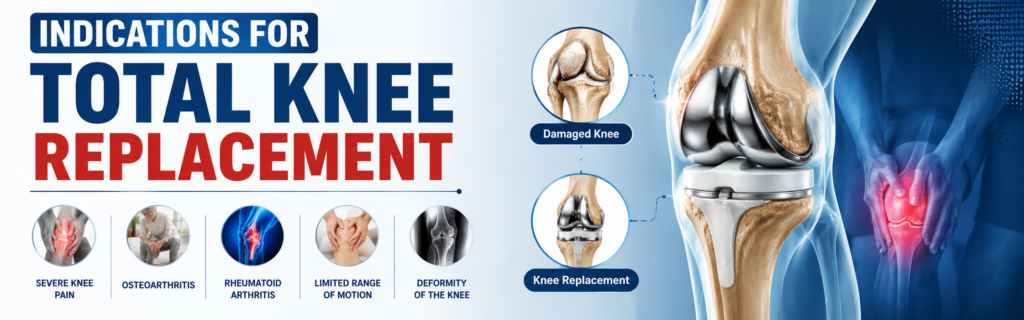
Total Knee Replacement (TKR) is recommended for patients with severe knee joint damage, chronic pain, and reduced mobility that significantly affects their quality of life. When non-surgical treatments no longer provide adequate relief, knee replacement surgery may be the most effective solution.
Who May Need Total Knee Replacement?
Patients experiencing advanced joint degeneration, severe arthritis, deformities, or persistent pain despite conservative treatments may be suitable candidates for knee replacement surgery.
Osteoarthritis
Progressive deterioration of knee cartilage causing pain, stiffness, and restricted movement.
Rheumatoid Arthritis
Chronic inflammation of the joint lining leading to cartilage and bone destruction.
Traumatic Arthritis
Arthritis resulting from previous knee injuries, fractures, or ligament damage.
Knee Deformities
Moderate valgus (knock-knee), varus (bow-leg), or flexion deformities affecting alignment and mobility.
Avascular Necrosis
Loss of blood supply to bone causing collapse of the knee joint surface and severe pain.
Failed Previous Surgery
Knee replacement may be required to correct problems caused by unsuccessful earlier procedures.
Are You a Candidate for Knee Replacement?
Before considering Total Knee Replacement, ask yourself:
- Have all non-surgical treatment options been tried?
- Is knee pain limiting your daily activities and mobility?
- Are you unable to enjoy activities you previously enjoyed?
- Is stiffness affecting your independence and quality of life?
If the answer is Yes, you may be a suitable candidate for Total Knee Replacement Surgery.
Types of Knee Implants Available
Modern knee replacement surgery offers different implant designs to match the patient's anatomy, lifestyle, and functional needs.
Fixed Bearing Knee
The most commonly used and time-tested implant with over 25 years of successful clinical outcomes worldwide.
Mobile Bearing Knee
Features a rotating platform designed to reduce wear and potentially improve implant longevity.
High Flexion Knee
Designed to provide greater bending capacity, though final flexibility depends largely on rehabilitation and preoperative mobility.
Constrained Knee
Used for unstable knees, severe deformities, or revision knee replacement surgeries requiring additional support.
Choosing the Right Knee Implant
The ideal implant depends on several factors including age, bone quality, degree of deformity, activity level, previous surgeries, and the surgeon’s recommendation.
A personalized treatment plan ensures the best possible outcome, improved mobility, and long-term implant success.
All You Need to Know About Knee Replacement Surgery
Total Knee Replacement (TKR) is one of the most successful orthopedic procedures, helping patients regain mobility, reduce pain, and improve their quality of life.
Common Causes
Osteoarthritis caused by wear and tear is the most common reason for knee replacement surgery. Rheumatoid arthritis, injuries, and infections may also damage the knee joint.
When Is Surgery Needed?
Surgery is recommended when knee pain and stiffness significantly affect daily activities, mobility, and overall quality of life.
Benefits of TKR
Total knee replacement is designed to provide painless standing, sitting, walking, and improved participation in everyday activities.
Advanced Surgical Techniques
Modern surgical tools and techniques have made knee replacement one of the most successful surgeries performed worldwide.
Customized Implant Selection
The choice of implant and surgical approach depends on the patient's condition and the surgeon's recommendation.
Durable Implant Materials
Knee implants are made from high-quality materials such as cobalt-chrome, titanium, and polyethylene for long-lasting performance.
Knee Replacement Implant Components
A knee prosthesis generally consists of two major components:
These components are designed to replicate natural joint movement while minimizing friction and maximizing durability.
Post-Surgery Recovery & Rehabilitation
Potential Risks & Complications
- Deep Vein Thrombosis (DVT)
- Infection
- Joint Stiffness
- Implant Loosening
Although complications are uncommon, proper postoperative care and rehabilitation significantly improve outcomes and long-term success.
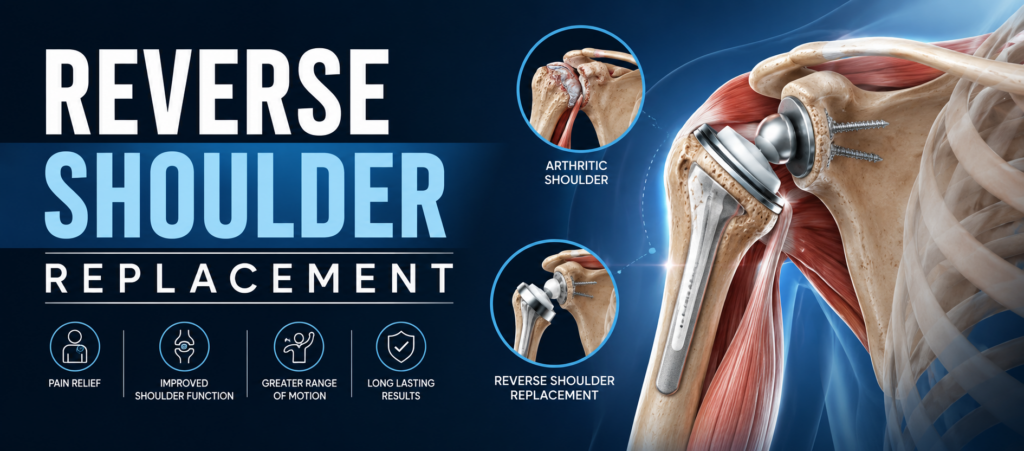
Reverse Shoulder Replacement
Reverse Shoulder Replacement is an advanced surgical procedure designed for patients who are not suitable candidates for conventional shoulder replacement. It is commonly recommended for individuals with severe shoulder muscle damage, irreparable rotator cuff tears, complex fractures, or failed previous shoulder surgeries.
How Reverse Shoulder Replacement Works
Unlike traditional shoulder replacement, where a metal ball and plastic socket mimic the natural anatomy, reverse shoulder replacement reverses these components. A metal ball is attached to the shoulder blade (scapula), while a plastic socket is placed on the upper arm bone (humerus).
This innovative design allows the deltoid muscle to take over the function of damaged rotator cuff muscles, improving shoulder stability, movement, and strength.
Ideal for Rotator Cuff Damage
Suitable for patients with severe rotator cuff tears that cannot be repaired.
Complex Fracture Treatment
Effective for treating severe shoulder fractures and joint damage.
Improved Shoulder Function
Helps restore arm movement and improve daily activities.
Long-Term Pain Relief
Provides significant reduction in pain and improved quality of life.
Surgical Technique & Recovery
Reverse shoulder replacement is performed under general anesthesia. During surgery, the damaged portions of the shoulder joint are replaced with specially designed prosthetic components. The surgeon repositions the ball and socket to improve shoulder function and stability.
Postoperative rehabilitation is essential for successful recovery. Treatment typically begins with gentle passive movements followed by active exercises and physiotherapy focused on strengthening the deltoid and surrounding muscles.
Frequently Asked Questions
Who is a candidate for reverse shoulder replacement?
Patients with severe arthritis, extensive rotator cuff damage, failed shoulder surgeries, or complex shoulder fractures.
What are the potential risks?
Risks may include infection, implant dislocation, nerve injury, implant loosening, wear, and rare fractures during surgery.
What results can patients expect?
Most patients experience significant pain relief and improved shoulder function, particularly for lifting and overhead activities.
How long is the recovery period?
Recovery usually includes several weeks in a sling followed by 3–6 months of physiotherapy. Full recovery may take up to one year.
How long do reverse shoulder implants last?
Modern reverse shoulder replacements generally last between 10–15 years depending on activity level and implant type.
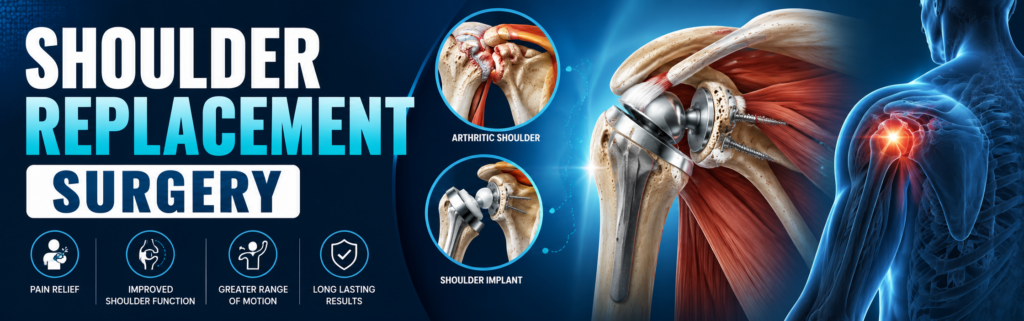
Shoulder Replacement Surgery
Shoulder replacement surgery is a safe and effective procedure that helps relieve pain, restore mobility, and improve quality of life for patients suffering from severe arthritis, fractures, or degenerative shoulder conditions.
Understanding the Shoulder Joint Anatomy
The shoulder is one of the most flexible joints in the human body and is made up of three bones:
The shoulder is a ball-and-socket joint, where the head of the humerus fits into a shallow socket called the glenoid.
Articular cartilage covers the surfaces of the bones and allows smooth movement. A synovial membrane produces lubricating fluid that minimizes friction, while surrounding muscles and tendons provide strength, stability, and support.
Shoulder Joint Replacement Procedure
In shoulder replacement surgery, damaged portions of the shoulder joint are removed and replaced with artificial components known as prostheses.
Partial Shoulder Replacement
Replacement of only the humeral head (ball component).
Total Shoulder Replacement
Replacement of both the humeral head and glenoid socket.
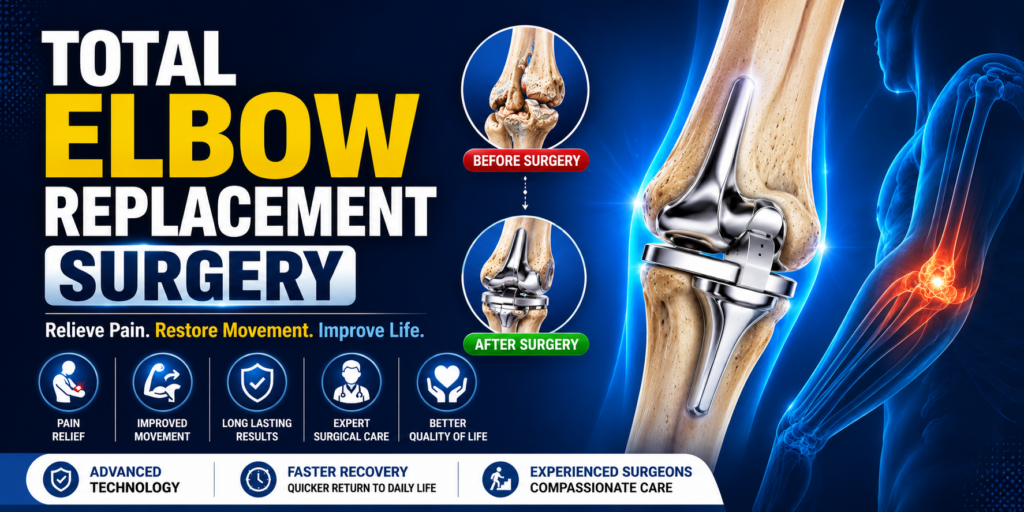
Total Elbow Replacement Surgery
Although elbow replacement surgery is less common than hip or knee replacement, it is highly successful in relieving pain and helping patients return to normal activities.
Understanding the Elbow Joint Anatomy
The elbow is a hinge joint formed by three bones:
The joint surfaces are covered by smooth articular cartilage and surrounded by a synovial membrane that produces lubricating fluid to reduce friction.
Muscles, tendons, and ligaments work together to provide stability, strength, and smooth arm movement.
Total Elbow Replacement Procedure
During total elbow replacement surgery, damaged portions of the humerus and ulna are removed and replaced with artificial components.
Metal & Plastic Hinge Design
The prosthesis includes a durable metal and plastic hinge mechanism.
Stem-Based Implant
Metal stems are inserted into the bone canal for stability.
Multiple Implant Sizes
Available in different sizes to suit individual patient needs.
Partial & Total Replacement Options
Treatment is customized according to joint damage and patient requirements.
Choosing the Right Implant
There are different types of elbow replacement implants available. Your orthopedic surgeon will recommend the most suitable option based on your age, activity level, bone quality, and overall joint condition.