
Best Knee Replacement Surgeon in Noida — Dr. Sushil Sharma
Dr. Sushil Sharma is a senior knee replacement surgeon in Noida, practising at Kailash Hospital & Heart Institute, Sector 27, with 38+ years of experience and more than 10,000 joint replacements. He offers total, partial, bilateral, revision and robotic knee replacement. This page walks you through the whole journey, from the first twinge of knee pain to walking comfortably again.

Dr. Sushil Sharma at a Glance
| Surgeon | Dr. Sushil Sharma, Senior Consultant (Joint & Knee Replacement Surgeon) |
|---|---|
| Hospital | Kailash Hospital & Heart Institute (Kailash Hospital), Sector 27, Noida |
| Qualifications | MBBS, D.O. (Ortho), MCh (Ortho), FJRS (Swiss) |
| Experience | 38+ years; more than 10,000 joint replacements |
| Knee operations | Total, partial, bilateral, revision and robotic knee replacement |
| Robotic system | CUVIS, a fully active robotic platform, at Kailash Hospital & Heart Institute, Noida |
| Usual hospital stay | About 3 to 4 days for one knee |
| Languages | Hindi, English, Punjabi |
| Appointments | +91 9873114480 or 9810894321 |
Last updated: 30 October 2026. This page gives general information and does not replace an examination.
Medically reviewed by Dr. Sushil Sharma, Senior Consultant (Joint and Knee Replacement Surgeon), Kailash Hospital and Heart Institute. Last reviewed: 30 October 2026.
Stage 1 · The pain begins
Knee Pain That Starts Deciding Your Day
It begins quietly. First it is the stairs, then getting up from a low chair, then the first few steps each morning. You ease off a little, take a tablet when it hurts, and tell yourself it is just age. But the walk to the market gets shorter, the night gets interrupted, and your knee starts to decide your plans.
What is happening inside the knee
In most people the cause is osteoarthritis, the gradual wearing of the smooth cartilage that cushions the joint. As the cartilage thins, the bones lose their cushion, the joint becomes stiff and swollen, and movement starts to hurt.
Early signs worth noticing
- Pain on stairs or when standing up from a chair
- Morning stiffness that eases within about half an hour
- Swelling, or a grinding or catching feeling
- A knee that gives way, or no longer bends or straightens fully
Has your knee started deciding how far you walk, which stairs you climb and how well you sleep?
That is usually the point where people stop treating the pain and start asking what is causing it.
Stage 2 · Months of half-solutions
When Home Remedies Stop Working
You try what everyone suggests: a pain balm, a hot-water bag, a course of painkillers, a few exercises from a video. Some weeks are better. Then a long journey or a crowded festival brings it all back, and the relief from each tablet lasts a little less than before.
What can help in the early stage
- Gentle, regular movement and physiotherapy-guided strengthening of the thigh muscles
- Gradual weight loss if you are overweight, because every extra kilo adds load to the knee
- A walking stick or a knee brace if your doctor advises one
- Short courses of pain relief, taken safely and with medical advice
When not to wait any longer
See an orthopaedic doctor if pain wakes you at night, the knee swells suddenly, feels hot or red, locks, keeps giving way, or you cannot put weight on the leg. Pain that lasts more than a few weeks, or keeps returning when the medicine wears off, also deserves a proper assessment. Our guide to knee pain relief at home explains what to try first.
Has the pain lasted more than a few weeks, or kept coming back every time the medicine wears off?
Pain that keeps returning is a reason to find the cause, not a reason to take more tablets.
Stage 3 · The first consultation
Your First Consultation with a Knee Replacement Surgeon in Noida
You finally book the appointment. On the day you carry a file of old X-rays, a list of tablets and a longer list of worries. In the consultation room at Kailash Hospital & Heart Institute in Sector 27, the conversation comes first: your story, in your words.
What a typical consultation covers
- Your history: when the pain began, what makes it worse, what you have tried and what you can no longer do
- The examination: how far the knee bends and straightens, swelling and warmth, the alignment of the leg, the stability of the ligaments and the way you walk
- Your scans: a review of any X-rays or MRI you bring, and advice on any further tests you may need
What to bring
Previous X-rays, MRI or other scan reports, earlier prescriptions and reports, a list of your regular medicines, and your insurance details if you may need surgery.
Not sure what to carry to your first visit, or what to ask once you are in the room?
A little preparation helps you leave with clear answers after one visit.
Stage 4 · The diagnosis
Diagnosis: What Your X-Ray and Examination Show
Your X-ray goes up on the screen. The gap between the bones, which should be a clear dark space, has narrowed, and small bony spurs have formed at the edges. For the first time the pain has a picture. Dr. Sharma explains what stage the arthritis has reached and what each choice would mean for you.
How the diagnosis is made
- X-ray: shows how much joint space is left, bone spurs and any deformity of the knee
- MRI: used only when a ligament, meniscus or cartilage injury is suspected
- Blood tests: advised when an inflammatory arthritis such as rheumatoid arthritis is suspected
The result is a plan, not an automatic operation
When arthritis is early or moderate, treatment usually starts with weight management, physiotherapy, medicines, walking aids and selected injections. When the joint is badly worn and pain keeps limiting daily life despite these measures, knee replacement is discussed. Arthritis surgery is rarely an emergency, so you can ask questions and take a second opinion before you decide.
Have you been told you need a knee replacement, but are not sure it is really time?
A second opinion is a normal part of this decision. Bring your X-rays and reports.
Stage 5 · Choosing the operation
Choosing the Right Knee Replacement: Total, Partial, Bilateral, Revision or Robotic
Surgery is not fixed yet. First comes the choice: replace the whole joint or only the worn part, one knee or both, a standard operation or a robot-assisted one. Dr. Sharma sets out each option against your own X-rays, your age and your daily life, so that the decision is yours.
The options Dr. Sharma offers
- Total knee replacement: resurfaces the whole joint and is the most common operation for advanced arthritis
- Partial (unicompartmental) knee replacement: replaces only the damaged part of the knee when the rest of the joint is healthy
- Bilateral knee replacement: both knees replaced during one admission in suitable patients
- Revision knee replacement: redo surgery for an implant that has worn out, loosened or become painful
- Robotic knee replacement: performed with the CUVIS system, a fully active robotic platform. The operation is planned from your CT imaging, the robotic arm carries out the planned bone cuts, and Dr. Sharma supervises every step and can stop or adjust the plan at any time
Robotic surgery is an option, not a requirement. Whether it suits your knee depends on your X-rays and your health, not on the technology alone. Read more in knee replacement surgery explained and robotic knee replacement FAQs.
Wondering whether robotic knee replacement is right for your knee, or whether a standard operation is enough?
The answer comes from your X-rays and your knee, and Dr. Sharma will explain it plainly.
Stage 6 · Getting ready
Getting Ready: Tests, Insurance and Planning
The date is not yet decided, but the planning has begun. You collect the reports, ask the hospital about insurance approval, and talk to the family about who will help in the first weeks. Everything that can be settled before the day makes the day itself calmer.
Fitness checks before surgery
Your team will advise the tests you need. These typically include blood tests, an ECG and a review of your heart, lungs, blood pressure and blood sugar. The anaesthetist assesses you before the day, and you will be told which of your regular medicines to continue or pause.
Insurance, cost and practical planning
- Ask the hospital’s insurance (TPA) desk about cover and pre-authorisation, and ask for a written, itemised estimate
- Plan who will help you at home, and prepare a safe path: remove loose rugs, keep a firm chair and a raised toilet seat ready
- Arrange a walker and book physiotherapy, so that nothing is left for the last day
These pages answer the questions patients ask most: knee replacement insurance and TPA questions, the cost of knee replacement in Delhi NCR and how to choose a knee replacement surgeon in Noida.
Worried about the cost, the insurance approval or who will look after you at home?
These questions are easier to settle before a date is fixed.
Stage 7 · Surgery day
Surgery Day at Kailash Hospital, Noida
On the morning of surgery you arrive as advised, having kept fasting. The team confirms your details and which knee is to be operated. The anaesthetist talks you through what will happen, and you are taken to the operating theatre. Your family waits, knowing that the plan was made long before today.
What typically happens
- Anaesthesia: spinal or general anaesthesia, chosen with you beforehand by the anaesthetist, so that you feel no pain during the operation
- The operation: the worn surfaces of the knee are replaced with implants. With CUVIS, the plan made from your CT scan guides the robotic arm while Dr. Sharma supervises every step
- Waking up: you are watched closely in the recovery area while pain relief and blood-clot prevention measures begin
Some pain after surgery is expected, but modern pain control keeps most patients comfortable, and early movement helps it settle faster. Tell your team early if pain is not controlled. Read more: is knee replacement painful?.
Video: “What happens in knee replacement surgery? | घुटना रिप्लेसमेंट सर्जरी में क्या होता है” by Dr. Sushil Sharma.
Afraid of the operation itself: the anaesthesia, the pain, the unknowns?
Ask every question before you decide. An informed decision is a calmer one.
Stage 8 · The first days
The First Days: Standing, Walking and Going Home
Within a day or two, a physiotherapist helps you to your feet. The first steps with a walker feel strange and a little frightening, and then, quite suddenly, ordinary. By the time you leave, the knee that hurt for years is already bending further than it did before the operation.
In hospital
Most patients are helped to stand and walk within 24 to 48 hours of surgery. With Dr. Sharma, the usual hospital stay is about 3 to 4 days for one knee, depending on your health and progress.
Before you go home, you should know
- Which exercises to do, how often, and how far to walk
- How to care for the wound, and which medicines to take
- Which warning signs mean you should call the hospital the same day: fever, redness or warmth around the knee, wound discharge, calf pain or swelling, or a sudden increase in pain
- When your follow-up visit is
Wondering how long it will be before you can stand, walk and climb stairs again?
Most people want a clear picture of the first six weeks before they agree to surgery.
Stage 9 · Life afterwards
Weeks to Months: Getting Your Life Back
A few weeks later you notice you have stopped planning your day around your knee. The walker is in the cupboard, then the stick. You take the stairs without counting them. The morning stiffness that used to set the mood for the day is no longer there.
What recovery usually looks like
- First weeks: walking with a walker, then a stick, while swelling settles and the exercises build strength
- Around six weeks: most people are back to desk work and most of their daily routine
- Three to six months and beyond: strength and movement keep improving, with regular physiotherapy and follow-up visits
Modern knee implants often last 15 to 20 years or more, depending on your weight, activity and bone quality. Everyone recovers at their own pace, so treat these timelines as a guide. If floor sitting or squatting matters in your daily life, ask Dr. Sharma what is realistic for you. Our recovery and home exercise guide shows the first six weeks, week by week.
Ready to stop planning your life around your knee?
The first step is a conversation. Dr. Sharma consults at Kailash Hospital & Heart Institute, Sector 27, Noida.
Why Patients Trust Dr. Sushil Sharma
- Training: MBBS, D.O. (Ortho), MCh (Ortho), and a Fellowship in Joint Replacement Surgery (FJRS) at University Hospital Geneva, Switzerland, plus an arthroplasty fellowship in France
- Experience: 38+ years of orthopaedic practice and more than 10,000 joint replacements, including complex and revision surgery
- Leadership and research: Chairman of the Arthritis Foundation of India Trust; member of the Indian Orthopaedic Association, the International Osteoporosis Foundation and the Arthroplasty Foundation of India
- Recognition: Roche GSK Award (2005) and Linda Edwards Memorial Award (2009); author of “Defeat Osteoporosis”
Watch Dr. Sharma
More videos on Dr. Sharma’s YouTube channel →
Read more about his work on the robotic joint replacement page, and see how national media have quoted him below.
Dr. Sushil Sharma in the News
National outlets have recently quoted Dr. Sharma on bone health, arthritis and knee care. The summaries are ours; each link opens the full article on the publication’s website.
- India Today: bone health after 40, strength training and fracture prevention (20 October 2026)
- Hindustan Times: does exercise make arthritis worse? A knee replacement surgeon explains (16 October 2026)
- The New Indian Express: how age, weight and habits affect knee health (15 October 2026)
- Gujarat Samachar English: osteoporosis risks and bone health in young Indians (20 October 2026)
What Patients Say
“I was having extreme pain in my right knee… Later I contacted Dr. Sushil Sharma for Knee Replacement Surgery. Post operation it is 6 years and I have never had any problem in going to the office and working.” — Mrs. Alka Gaur, Age 52, Right Knee Replacement
“Recently I met Dr. Sushil Sharma at Kailash Hospital Noida with my painfully restricted activity status. He gave me confidence and now after both knees replacement surgery I am extremely happy and satisfied.” — Mrs. Kanta Gulati, Age 77, Bilateral Knee Replacement
Patient outcomes → · More patient stories → · Patient video stories on his Kailash Hospital profile →
Where to Consult Dr. Sushil Sharma in Noida
Kailash Hospital & Heart Institute, H33, Shaheed Arjun Sardana Marg, H Block, Pocket H, Sector 27, Noida, Uttar Pradesh 201301.
To book, call +91 9873114480 or 9810894321, use our contact page, message on WhatsApp, or book on the Kailash Hospital website. OPD days and timings are listed on his Kailash Hospital profile and can change, so please confirm before you visit.
Open Kailash Hospital & Heart Institute in Google MapsH33, Shaheed Arjun Sardana Marg, H Block, Pocket H, Sector 27, Noida 201301 · Get directions →Patients from Greater Noida and nearby areas
Patients from Greater Noida, Greater Noida West, Noida Extension, Ghaziabad and East Delhi regularly consult Dr. Sharma at Kailash Hospital & Heart Institute, Sector 27, Noida. If you are travelling from another area, call ahead to confirm the OPD day and time.
Frequently Asked Questions
Who is the best knee replacement surgeon in Noida?
Dr. Sushil Sharma is a senior knee replacement surgeon in Noida with 38+ years of orthopaedic experience and more than 10,000 joint replacements. He is Senior Consultant (Joint & Knee Replacement Surgeon) at Kailash Hospital & Heart Institute, Sector 27, and offers total, partial, bilateral, revision and robotic knee replacement. The right surgeon is one you can ask questions freely, so meet him before you decide.
Where does Dr. Sushil Sharma consult for knee replacement in Noida?
Dr. Sharma consults at Kailash Hospital & Heart Institute, H33, Shaheed Arjun Sardana Marg, H Block, Pocket H, Sector 27, Noida, Uttar Pradesh 201301. OPD days and timings are listed on his Kailash Hospital profile and can change, so please call +91 9873114480 to confirm before you visit.
How many knee replacement surgeries has Dr. Sushil Sharma performed?
Dr. Sharma has performed more than 10,000 joint replacements (hip, knee and shoulder) over a career of 38+ years, including primary, complex and revision knee replacements.
Does Dr. Sushil Sharma perform robotic knee replacement in Noida?
Yes. He uses the CUVIS robotic system, a fully active system, at Kailash Hospital & Heart Institute. The operation is planned from your imaging, the robotic arm carries out the planned bone cuts, and Dr. Sharma supervises every step and can stop or adjust the plan at any time.
How do I know whether I need a knee replacement?
Surgery is considered when arthritis has badly worn the joint and pain keeps limiting walking, stairs, sleep or daily work despite medicines, physiotherapy and other treatment. X-rays and an examination show how much damage there is, so the decision is made after a consultation, not on pain alone.
How long will I stay in hospital after knee replacement?
With Dr. Sharma, the usual stay is about 3 to 4 days for one knee, depending on your health and recovery. Most patients are helped to stand and walk within 24 to 48 hours of surgery.
How long does recovery take after knee replacement?
Most people return to light daily activities within a few weeks and to desk work at around six weeks, while strength and movement keep improving for three to six months or longer. Your own timeline depends on your fitness before surgery and on your physiotherapy. See the recovery guide for details.
Can both knees be replaced at the same time?
In suitable patients, yes. Both knees can be replaced during one admission after a fitness assessment. Otherwise the two knees are done in two stages, a few months apart.
What is the cost of knee replacement in Noida?
The cost depends on the implant, the hospital room category, whether one or both knees are done, whether robotic assistance is used, the length of stay and your insurance. Ask for a written, itemised estimate after your consultation. Our cost guide explains what affects the price.
Does health insurance cover knee replacement?
Many policies cover knee replacement when it is medically necessary, but waiting periods, sub-limits and room-rent caps vary. Ask the hospital’s insurance (TPA) desk about pre-authorisation before admission. See knee replacement insurance and TPA questions.
Is minimally invasive knee replacement available with Dr. Sharma?
Dr. Sharma offers minimally invasive techniques for suitable patients, using a smaller incision and aiming to disturb less muscle and soft tissue. Whether it suits your knee is decided after examination.
How do I book an appointment with Dr. Sushil Sharma in Noida?
Call +91 9873114480 or 9810894321, use the contact page, message on WhatsApp, or book through the Kailash Hospital website. Please bring your X-rays and reports.
From the Blog
 What is the Cost of Knee Replacement in Delhi NCR?
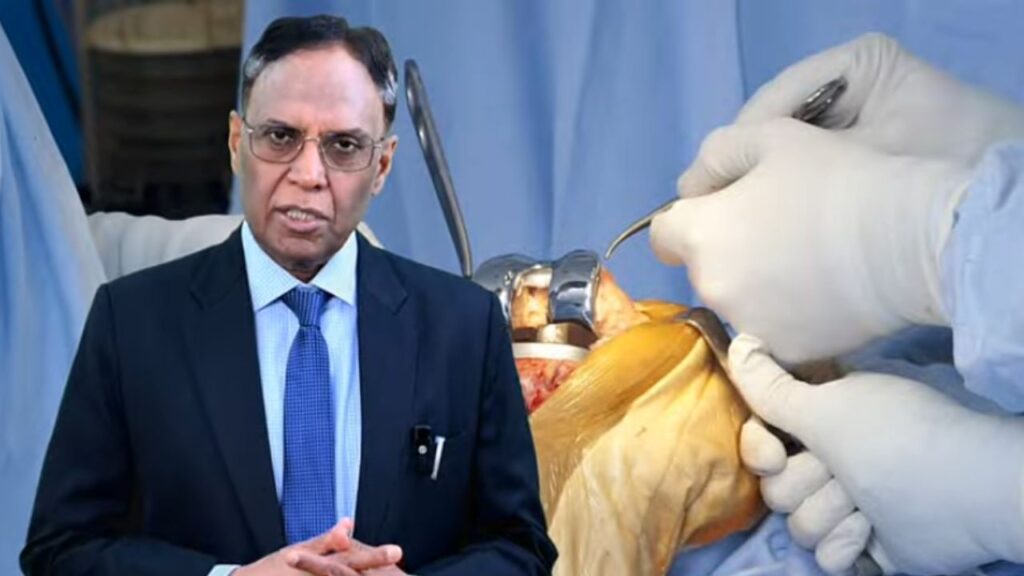 How to Choose the Best Knee Replacement Surgeon in Noida & Delhi NCR
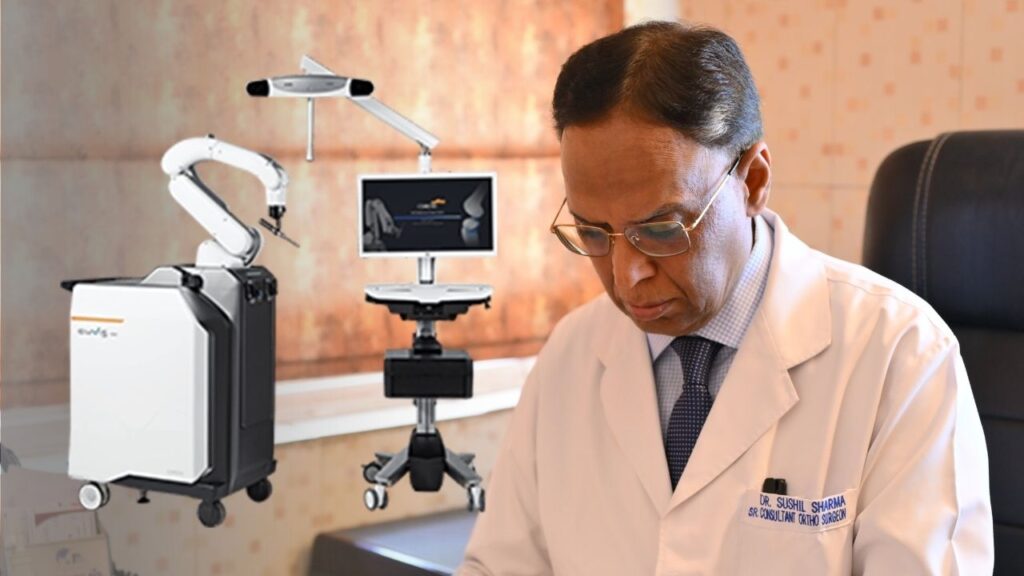 Introducing the Future: What is Robotic Knee Replacement?
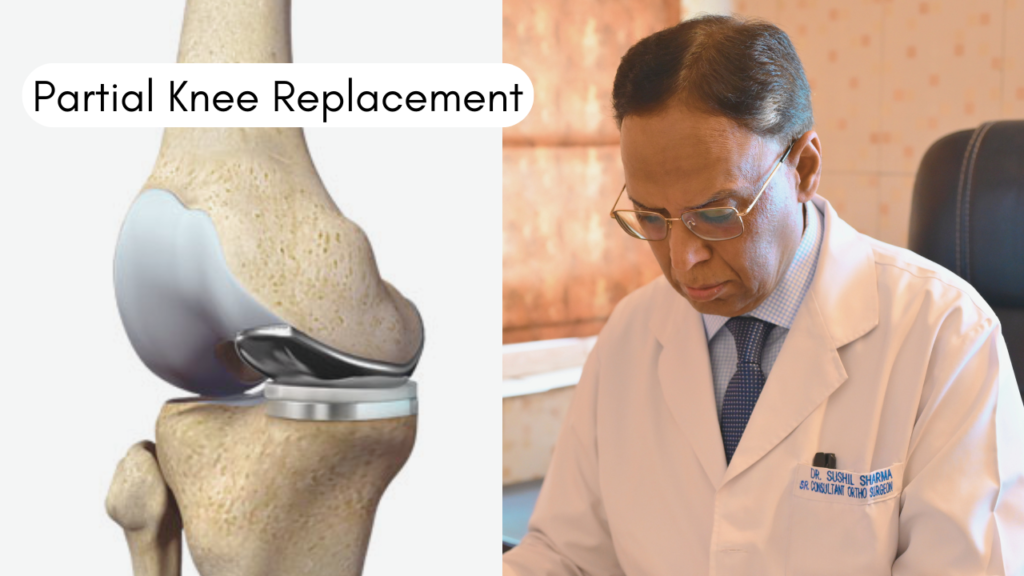 Partial vs Total Knee Replacement: Which One Do You Need?
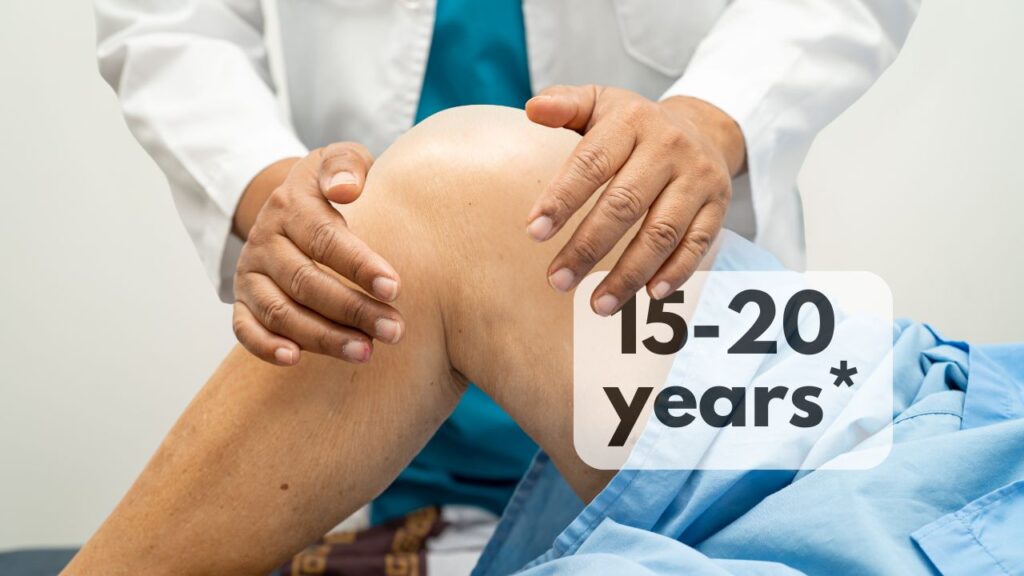 How Long Does a Knee Replacement Last?
 What Movements are Allowed After Knee Replacement?
Knee Replacement Guides for Patients in Noida
- Knee replacement surgery explained: age, success, risks and types
- Knee pain relief at home and non-surgical treatment
- Robotic knee replacement FAQs
- Knee replacement recovery and a 6-week home exercise guide
- Knee replacement insurance and TPA questions
- What is the cost of knee replacement in Delhi NCR?
- How to choose the best knee replacement surgeon in Noida
- Questions to ask a knee replacement surgeon before surgery
- All knee replacement FAQs
Your knee has been asking for attention for a long time. Will you let a conversation answer it?
Bring your X-rays and reports to Kailash Hospital & Heart Institute, Sector 27, Noida, and get a clear plan.
This page is for general information and is not a substitute for medical advice. Timelines are typical and vary from person to person. In an emergency, go to your nearest emergency department.